
Why how old you are influences how you view this masterpiece.
When you tell Creatives who only know a digital world how it was done in the art board/paste up era they look at you like you’re nuts, which makes sense, because… it was kind of nuts.
Don’t worry. This isn’t one of those “in-my-day-walking-to-school-in-a-snow-storm-500-days-a-year” posts.
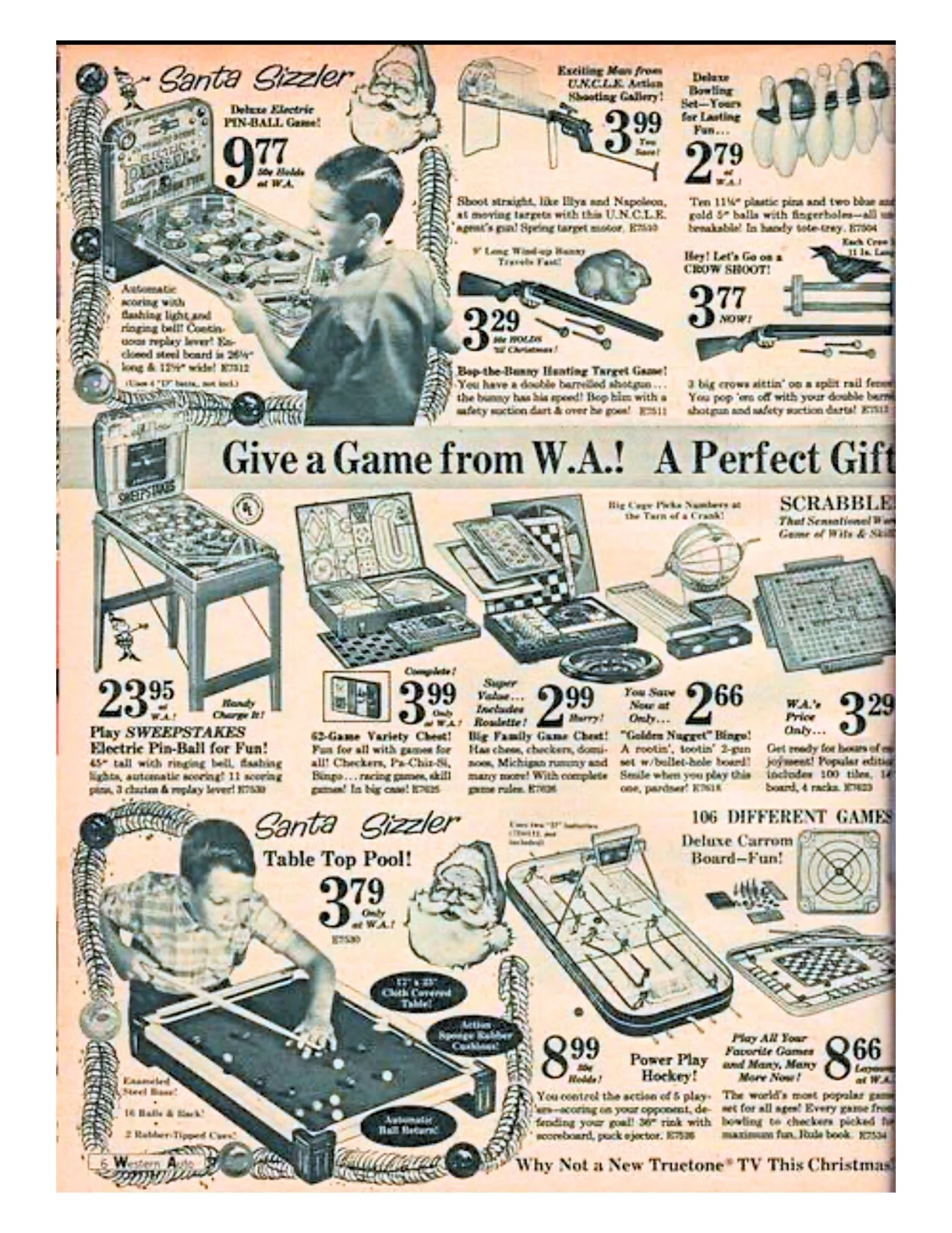
It’s just that I came across this bit of mid 20th century art and it occured to me that the past several generations of designers might have no idea how something like this came to be.
And how much work it was.
And how impressive it is.
I won’t go into the process, this link does a good job, but I’ll say this: if you’ve never arrived at the office first thing in the morning and had to make sure you turned on the wax machine before you hit the coffee machine, you wouldn’t believe me if I told you, even if I swore on the life of my burnisher.
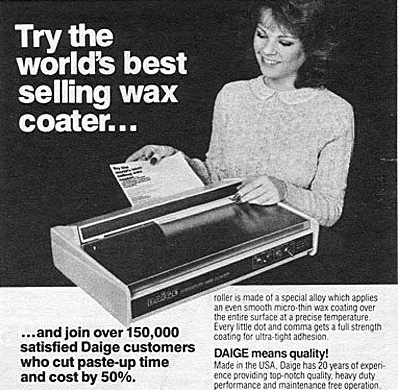
Click image for a great story on the waxer
What’s even more fascinating than how it was assembled, is how the rules of design apply even to a piece of hard sell retail art like the Santa Sizzler catalogue page above.
You need a big. You need a medium. You need a small. You need tone and value. Light. Dark. All these influences are at play in order to move the reader through the page. To me, this catalogue page is like a classical painting in that it follows the rules of composition and design. I can invest time admiring this thing.
See, I started my career designing stuff like this.
My first real professional job was in the marketing department at Avon Canada, first doing paste-up, and being so bad at it that they gave me the chance to art direct those little printed catalogues they used to bring door to door.
Ding Dong.
Ok the pages of those lovely little books were a bit more sophisticated looking than this catalogue page, but it was still retail and the allocated space could be a design challenge.
I learned more from the people I worked for in the first 3 months at that job than all my skoolin’. What a break.
And then I moved from Montreal to Toronto where (I’m not ashamed to say) I took a job at Consumers Distributing designing their catalogues. Bit of Canadian retail history that catalogue.
Once again I learned so much about the basic structure of design and composition doing layouts by hand with a marker, that I still think about it today. Cuz let’s face it: If you can make 12 Proctor Silex toasters look good on a page, you’ve learned a great deal about design.
(And to you Consumers Distributing enthusiasts: don’t get me started on that one specific weird item they used to sell).
There is a craft in what we do that can be lost along the way when we haven’t had to render type by hand or line things up manually. There’s no need for those hard skills any more. But it’s in the doing that we gain the knowledge of letterforms and layout. I am lucky I got to work through both eras.